
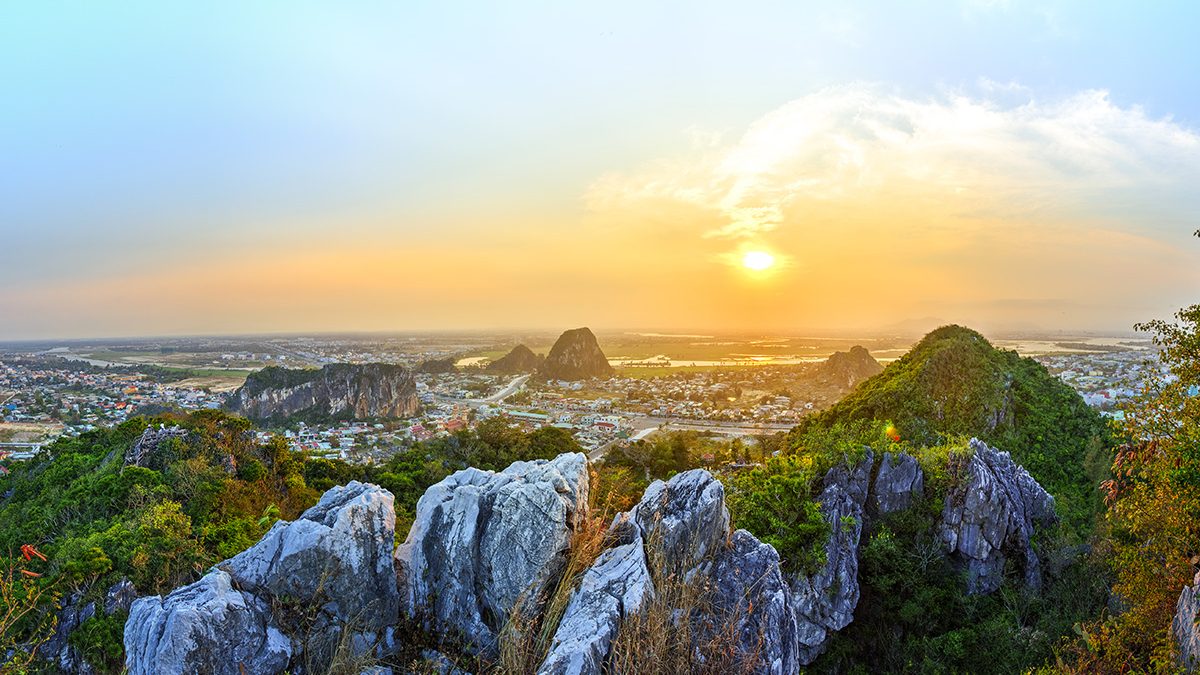
According to legend, the Marble Mountains were formed by a dragon who was sent by the gods to create a barrier between the sea and the land. The dragon used his massive tail to carve out the five hills and filled them with gems and precious stones. The mountain range became a sacred site for the locals, and over the centuries, numerous temples and pagodas were constructed on the hills, making it a popular destination for pilgrims.
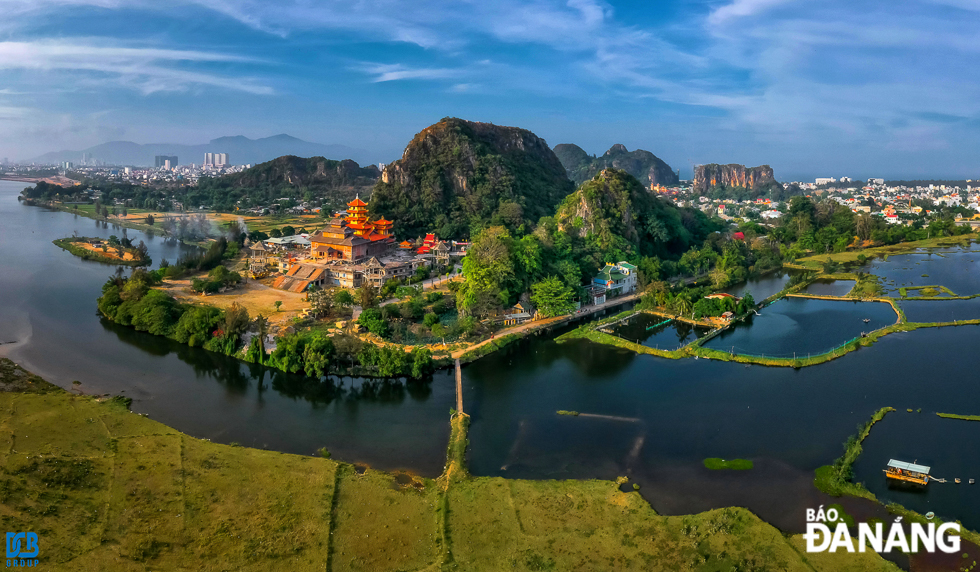
The Marble Mountains are known for their unique geological formations, made up of limestone and marble. Water erosion and weathering over millions of years have created numerous caves, tunnels, and grottos within the mountain range. The caves are adorned with stalactites and stalagmites, and some of them contain Buddhist shrines and statues.
During the Vietnam War, the Marble Mountains served as a strategic location for the Vietnamese Army, who used the caves and tunnels as a base to attack the US forces stationed in Danang. After the war, many of the temples and pagodas that were damaged during the conflict were restored and renovated. Today, the Marble Mountains is a popular tourist destination and an important cultural and historical site in Danang. Visitors can climb up to the peaks of the mountains, explore the caves and grottos, and enjoy breathtaking views of the surrounding area.
The five mountains were named after the five basic elements of Eastern philosophy: Kim Son (Mountain of Metal), which represents strength and power; Tho Son (Mountain of Earth), which represents stability and foundation; Moc Son (Mountain of Wood), which represents growth and prosperity; Hoa Son (Mountain of Fire), which represents passion and energy, and Thuy Son (Mountain of Water) which represents the flow of life.
Thuy Son - Mountain of Water
Thuy Son, located in the northeast, is the most beautiful mountain. Tourists often visit the scenic spot known as Non Nuoc Pagoda. The charming landscape can be described as the Thuy Son mountain stretching from east to west over an area of 15 hectares. Thuy Son consists of nine caves, five pagodas and towers. Among those are the Thach Nhu cave, and two beautiful temples: Linh Ung pagoda and Tam Thai pagoda. Vong Giang tower observes the surround rivers and Vong Hai tower observes the seasight.
Huyen Khong Cave captivates visitors with its incredibly glittering and mystical ambiance at Thuy Son. The cave is located in an exposed position, has a circular arch with five holes above allowing light to flood in from the outside. If you are in the cave on a sunny day, you will see light shining down through the cave's arch, making the limestone sparkle even more brilliantly.
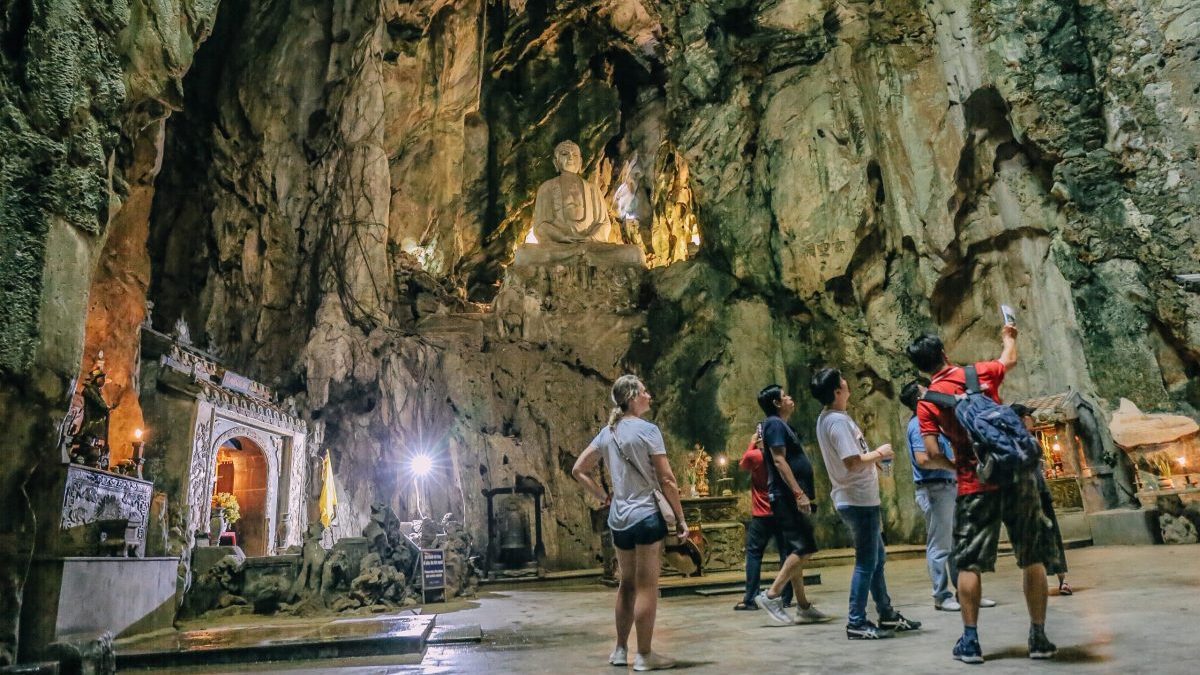
Am Phu Cave is located on the southern side and the biggest cave of Thuy Son. When tourists visit this cave, they will find that there is a lack of sunlight. The deeper they go, the darker it becomes, so it is called Am Phu or Hel. Some people say that if they put marked pomelos in there, after a few days they will float out to sea. This cave may have a connection to the ocean.
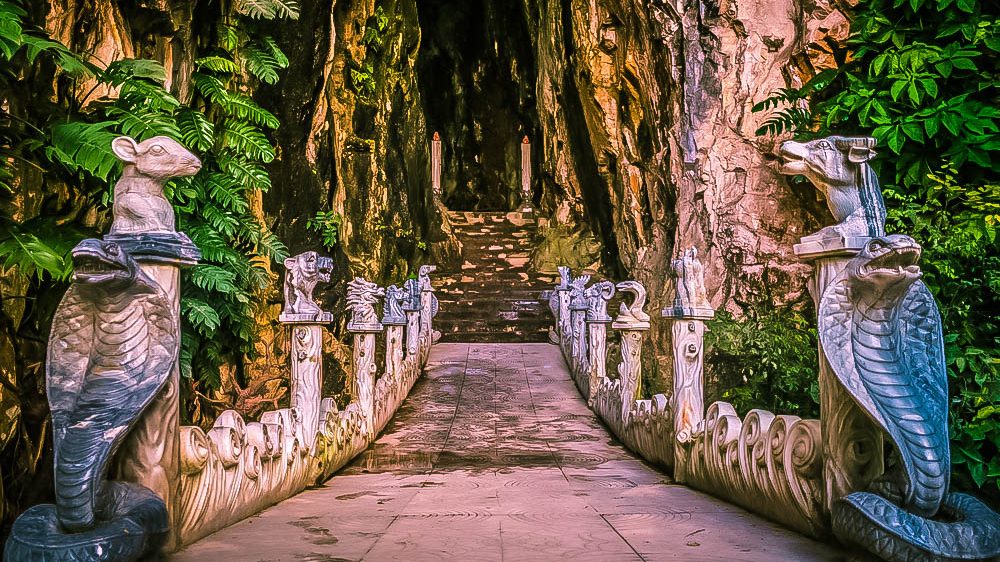
Linh Ung Pagoda
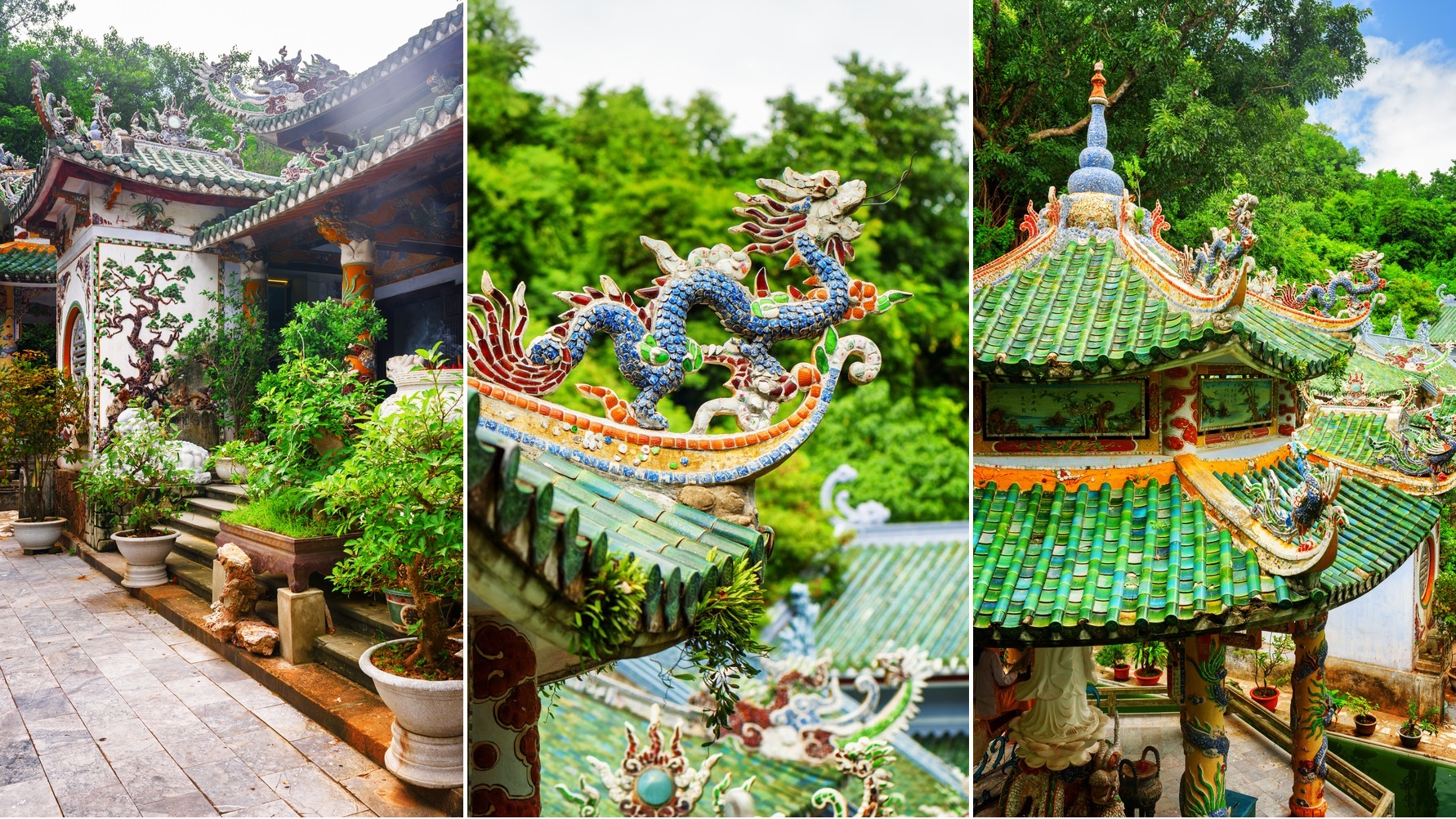
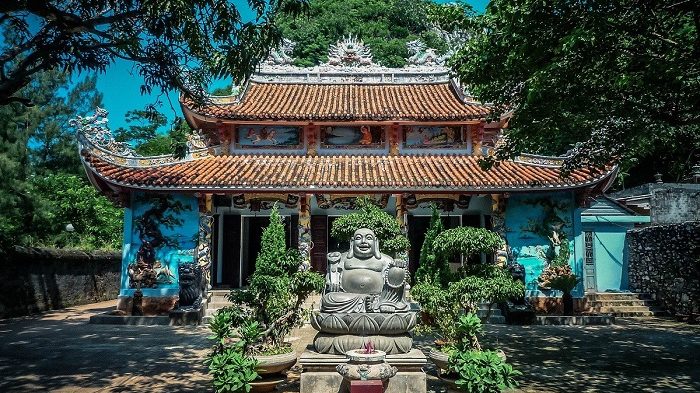
Linh Ung Pagoda is one of beautiful pagodas in Thuy Son, it is also an ancient temple facing east with views of the sea, and the back of the temple leans against the mountain as if to create a solid foundation for the temple. The temple was built in the first half of the 17th century during the reign of Emperor Canh Hung of the Le Dynasty. Then, Linh Ung Pagoda was built during the reign of King Minh Mang in 1825, and was named Ung Chan Tu. During the reign of King Thanh Thai in 1891, the pagoda was changed to Linh Ung Tu, with a large statue of Bodhisattva Avalokiteshvara. Linh Ung Pagoda worships the Three Buddhas, with Buddha Shakyamuni in the center, and on the right is the Di Lac (Laughing Buddha) and on the left is Di Da (Buddha Amitabha).
Tam Thai Pagoda
The temple was built in 1630. In April 1826, King Minh Mang ordered the casting of 9 statues and 3 large bells for the temple. Tam Thai temple also houses the "flaming heart" and a bell with the name of King Minh Mang engraved on it. The pagoda is situated on three levels of the mountain, which are called Lower Mountain, Middle Mountain and Upper Mountain. The mountain road is paved with stone steps, and at the summit there are three peaks called "Tam Thai" because they resemble "Sao Tam Thai", Three stars forming the tail of the Great Bear constellation, which the people often refer to as the Plow stars. Currently, the temple still preserves a gold-plated heart-shaped plate ("flaming heart") and a horizontal lacquered board which records the King Minh Mang's handwriting as a gift.
Kim Son - Mountain of Metal
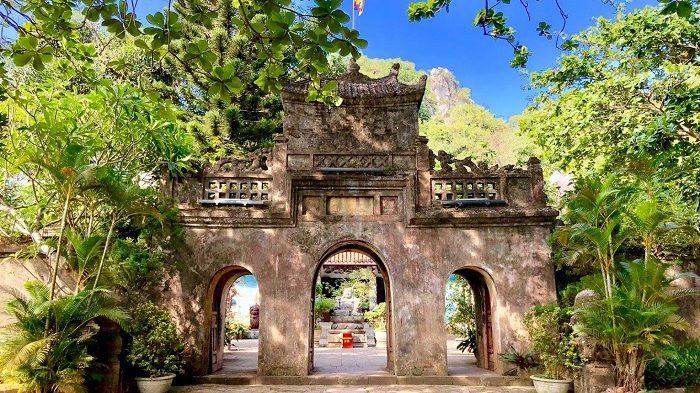
Kim Son is the most modest mountain among the six mountains that extend from east to west. The Truong River flows into the Da Nang River, and there is a ferry terminal called Ben Ngự where kings and lords used to visit for sightseeing. Over time, the sea turned into fields and the Truong River, formerly known as Lo Canh River, has been buried and turned into fields or lakes while some sections of the river that have not been filled in still leave traces.
The Quan The Am Festival
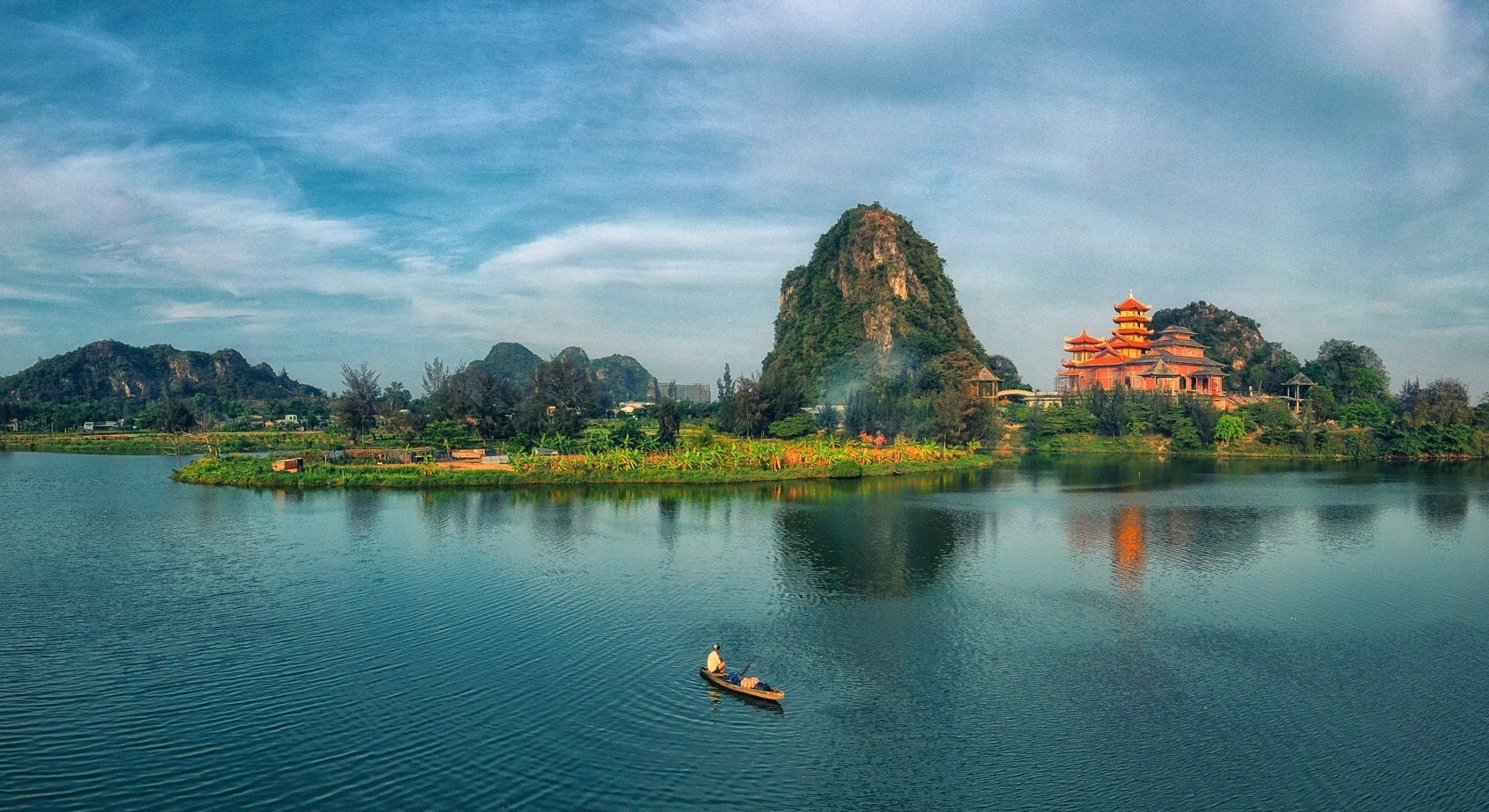
In 1956, Venerable Thich Phap Nhan discovered a statue of Quan Am made of marble holding a holy water vase, completely heavenly and perfectly whole, at the height of a human body, in a cave at the top of Kim Son. Behind and surrounding the statue were all the Bodhisattvas of the world, such as the good fortune goddess Ngoc Nu, the virtuous warrior, the sea master, the bamboo and others.
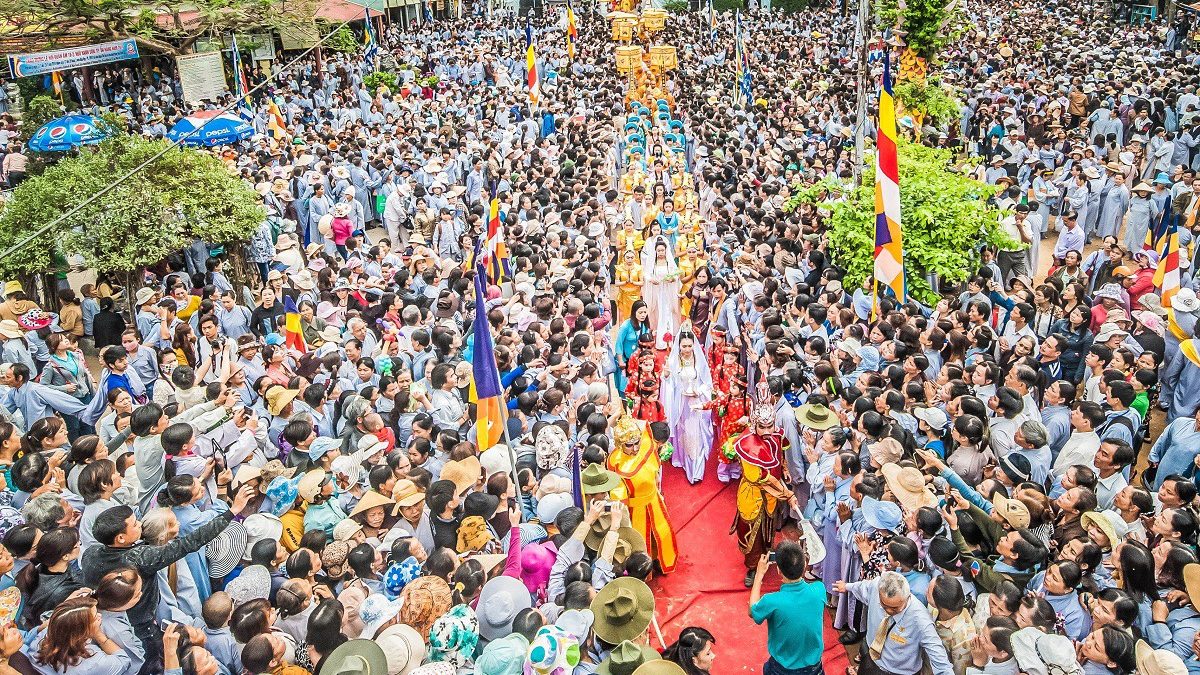
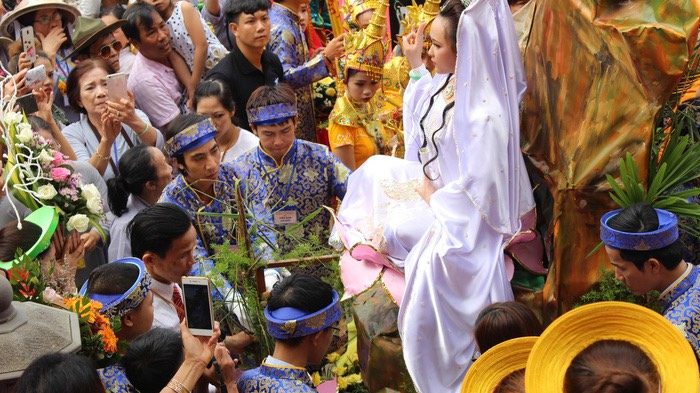
Based on that affinity, in 1962, Venerable Thich Phap Nhan, on the occasion of the inauguration of a new temple, organized the 19th of February lunar calendar ceremony, which later became the Quan The Am festival. Every year, a grand pilgrimage is held here on this important day.
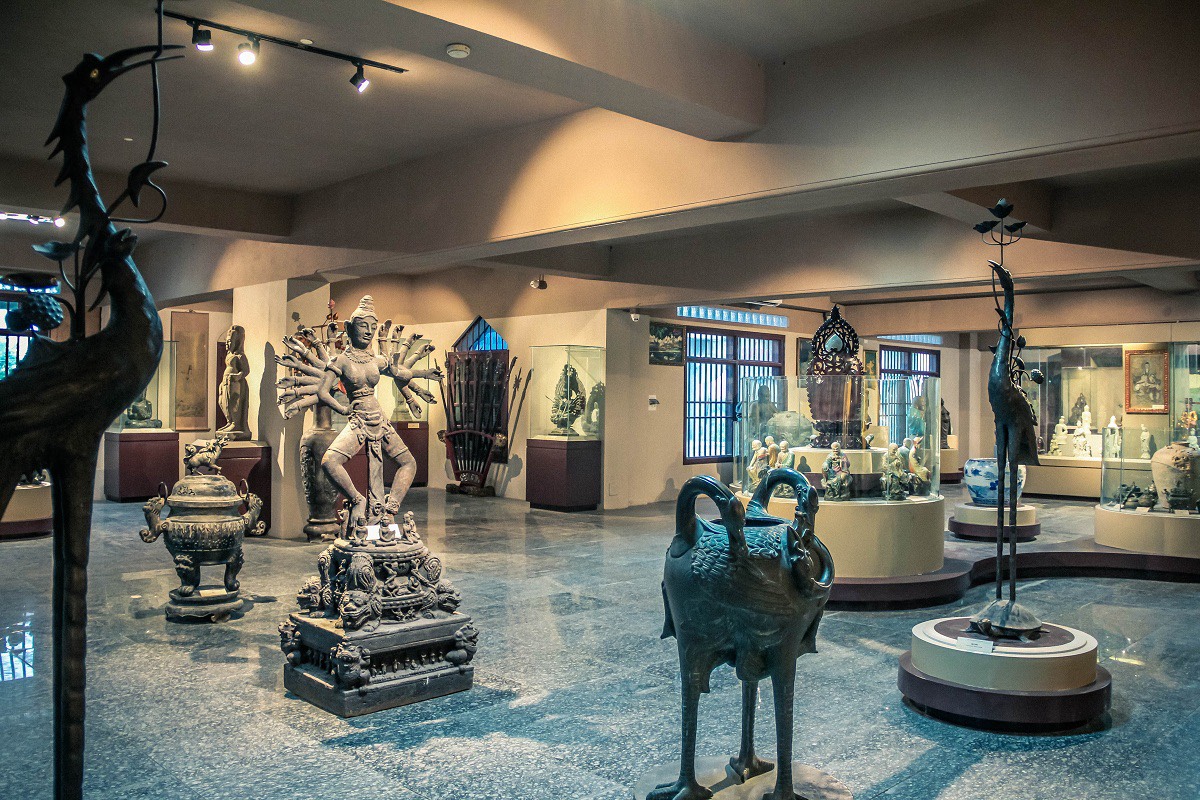
The Quan The Am Pagoda is currently being expanded and includes a very large stone temple, in which the Buddhist Cultural Museum – the first Buddhist museum in Vietnam – is located within the 700m2 grounds of the Quan The Am Pagoda. The museum currently displays over 200 artifacts that crystallize unique cultural values, including the sculpture of the bodhisattva Quan Am escorting her son, the bodhisattva Quan Am riding a dragon fish, as well as many ancient figurines such as Thich Ca, Duoc Su, Di Lac, Buddhist Bodhisattva Mat Tong, Quan Am, Champa, Di Da, bronze bells, and the eight world-honored staffs.
Hoa Son - Mountain of Fire
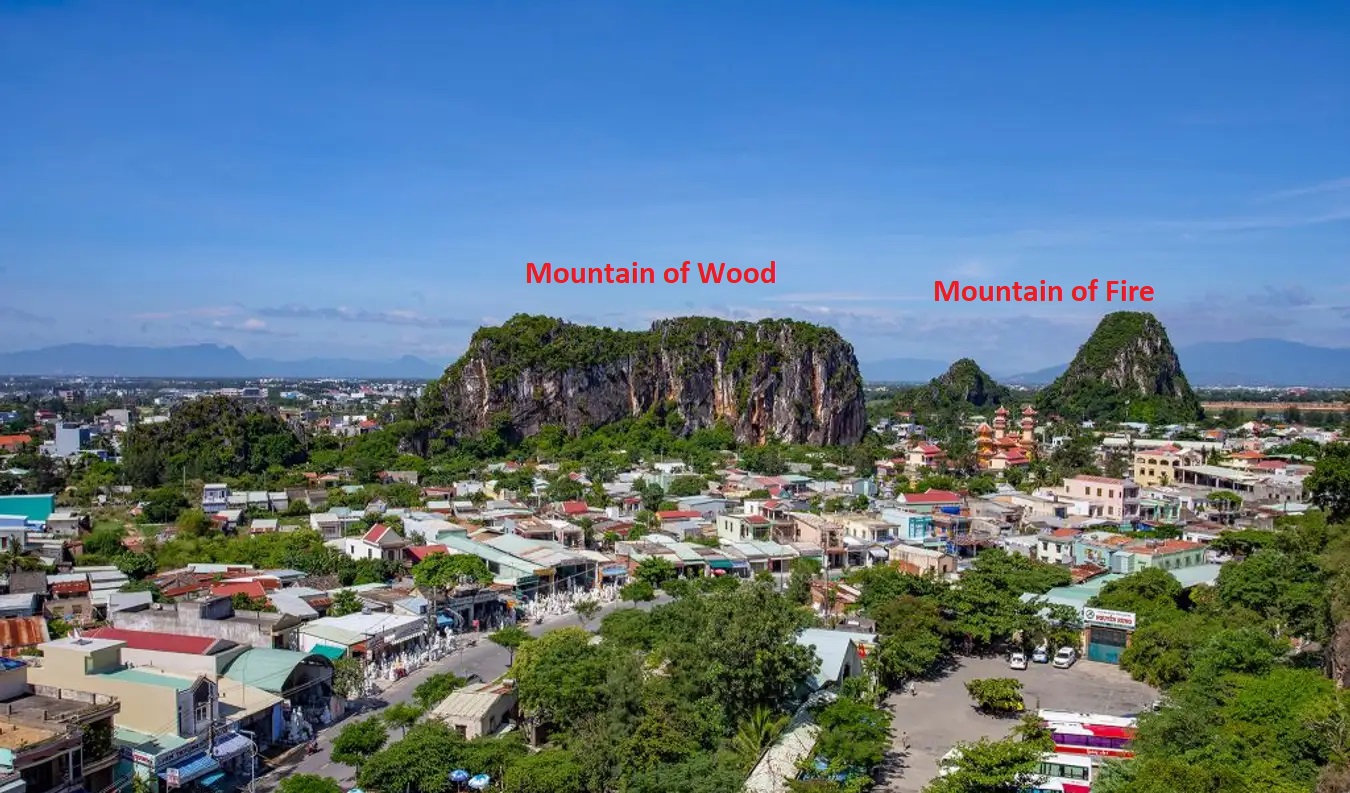
Hoa Son includes two hills, a Yin rock and a Yang rock, connected by a natural stone path.
The Yin rock of Hoa Son is located to the east, close to Le Van Hien road. The round peak of the mountain rises higher, with many rocky slopes and inclines, with trees growing on the rocks. On the eastern slope, there is a pine tree cave that extends from the southern slope to the northern slope. Local people often follow this path to Kim Son and Tho Son rocks.
The Yang rock of Hoa Son is located to the west. In the past, when there was still waterway transportation between Hoi An and Da Nang, there was a river port here and boat trading was bustling.
Moc Son - Mountain of Wood
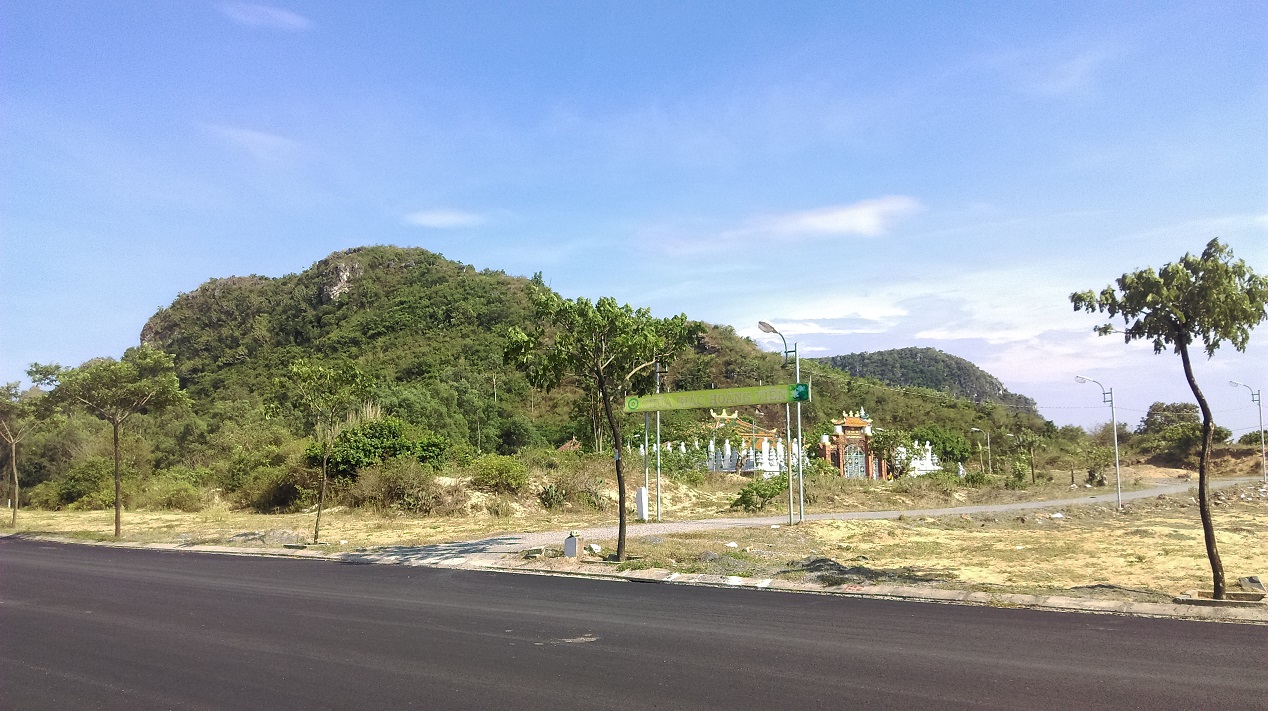
Moc Son is located in the southeast, parallel to Thuy Son mountain. Although it is called Moc Son, this mountain has very few trees and its slopes are steep. There is no temple on the mountain, only a white marble block called 'Co Mu' or 'Quan Am'. Below the mountain, there is a small cave called Dong Ba Trung.
Tho Son - Mountain of Earth
Hon Tho Son is a low mountain located in the center with a square shape and uneven sides. There is no beautiful scenery at Tho Son, only red clay soil and mixed sandstones. According to legends, Tho Son is a sacred place where the people of Chiem Thanh used to reside. Engravings on rocks can be found here as evidence of the Chiem Thanh civilization. They were believed to launch piracy attacks on the incoming Chinese merchant ships down to the Malay sea.
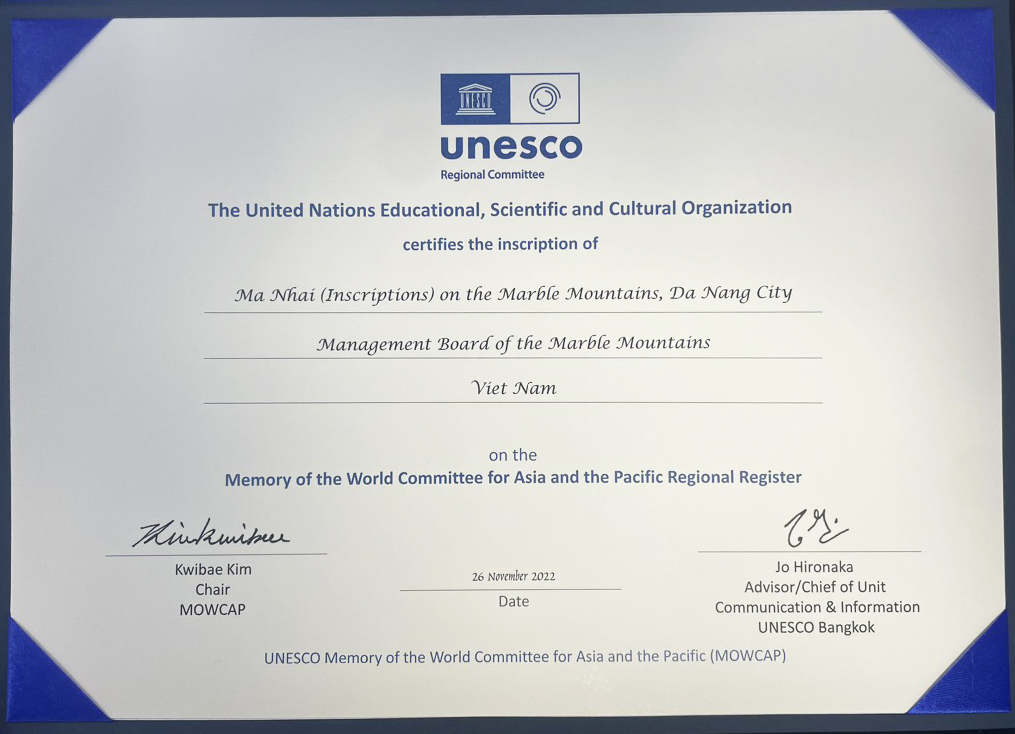
Inscriptions at Marble Mountains - UNESCO's recognition for Asia and Pacific Regional herritage
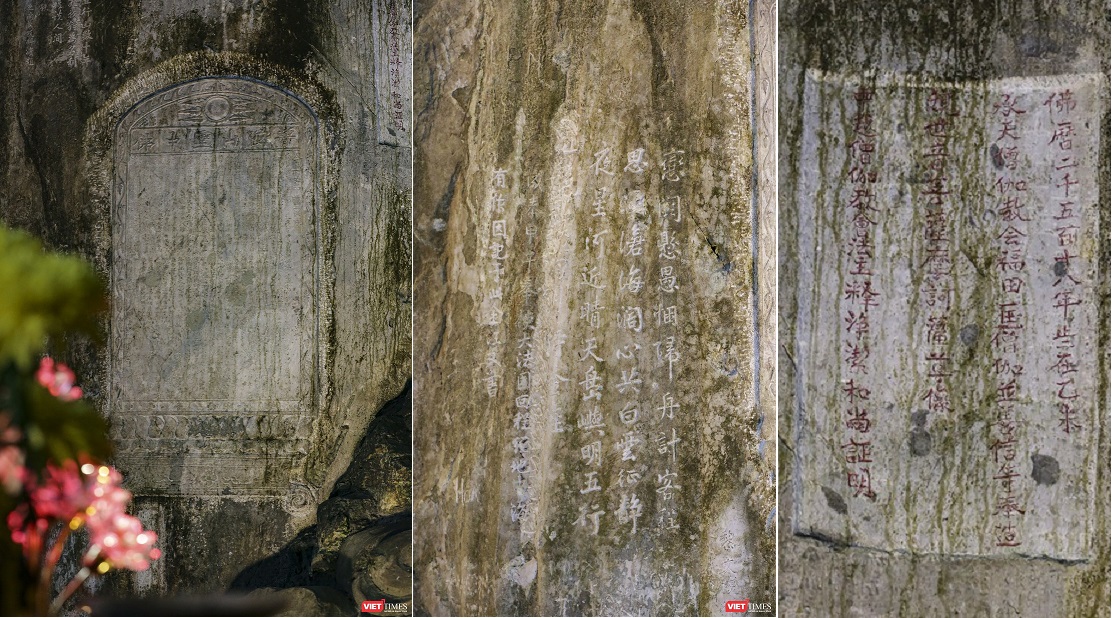
One of the most remarkable features of the Marble Mountains is the intricate inscriptions etched into the rock formations. These inscriptions are not only visually stunning but also carry significant historical and spiritual meanings.
The inscriptions (or Ma Nhai), which date back to the 17th century, can be seen across several different marble peaks within the mountain range. They represent a fusion of both Vietnamese and Chinese culture. They symbolize important teachings from Buddhism and Confucianism and showcase the richness of Southeast Asian spirituality. Although the time passed, the visitors can still feel the profound energy and sense of spirituality emanating from them.
Walking through the Marble Mountains, one can feel a deep sense of peace and tranquility, as if stepping into a world of ancient wisdom and spirituality. The inscriptions themselves are also extremely beautiful, with intricate calligraphy and ornate designs that speak to the artistic sensibilities of the cultures that created them.
Stone Caving Village of Non Nuoc
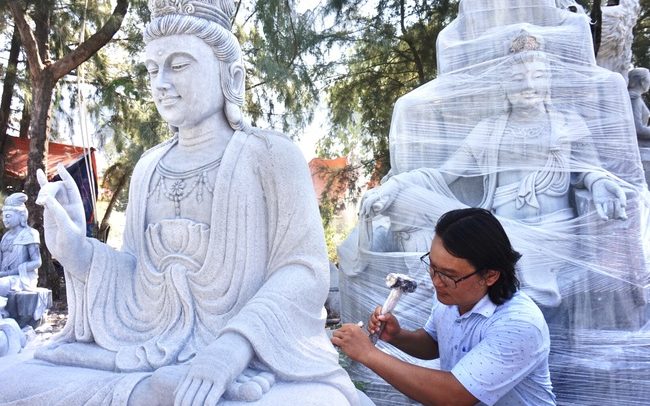
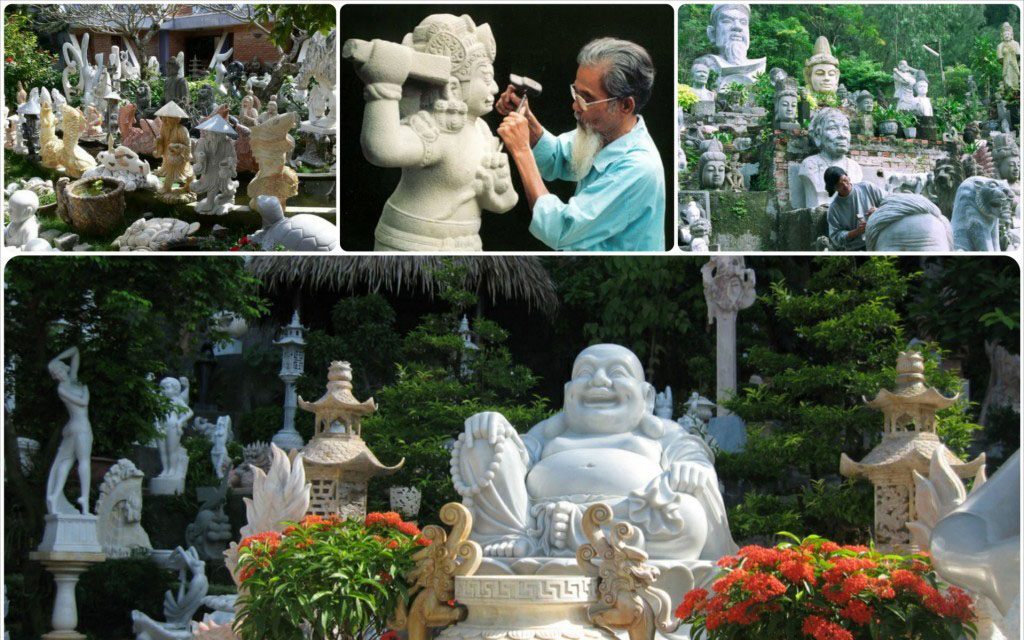
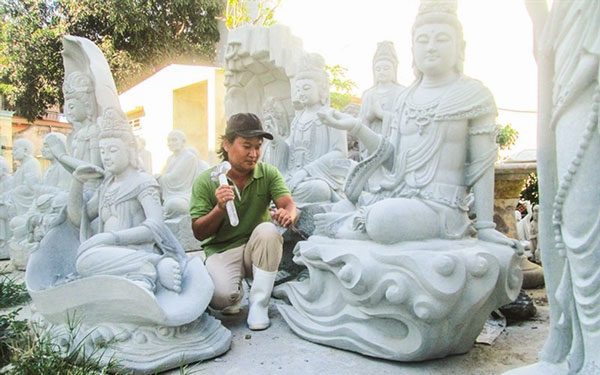
Stretching along the foothills of the Marble Mountains is the village of Non Nuoc, known for its stone sculpture handicrafts. Around 17th century, the sculpture artisans came from Thanh Hoa and settled in Quan Khai village to establish their careers because at that time there were no inhabitants or villages around the foot of Ngu Hanh Son mountain. The founder of the Non Nuoc stone carving craft was Huynh Ba Quat, who brought stone carving techniques from Thanh Hoa to the land of Ngu Hanh Son.
The Ngu Hanh Son are not only an important part of Vietnamese legend and culture but also a significant religious site. The mountains are home to many Buddhist and Hindu temples and pagodas, making it a popular destination for both tourists and locals. We wish you will have a visit for at least one time to this wonderful destination in Danang, Vietnam.